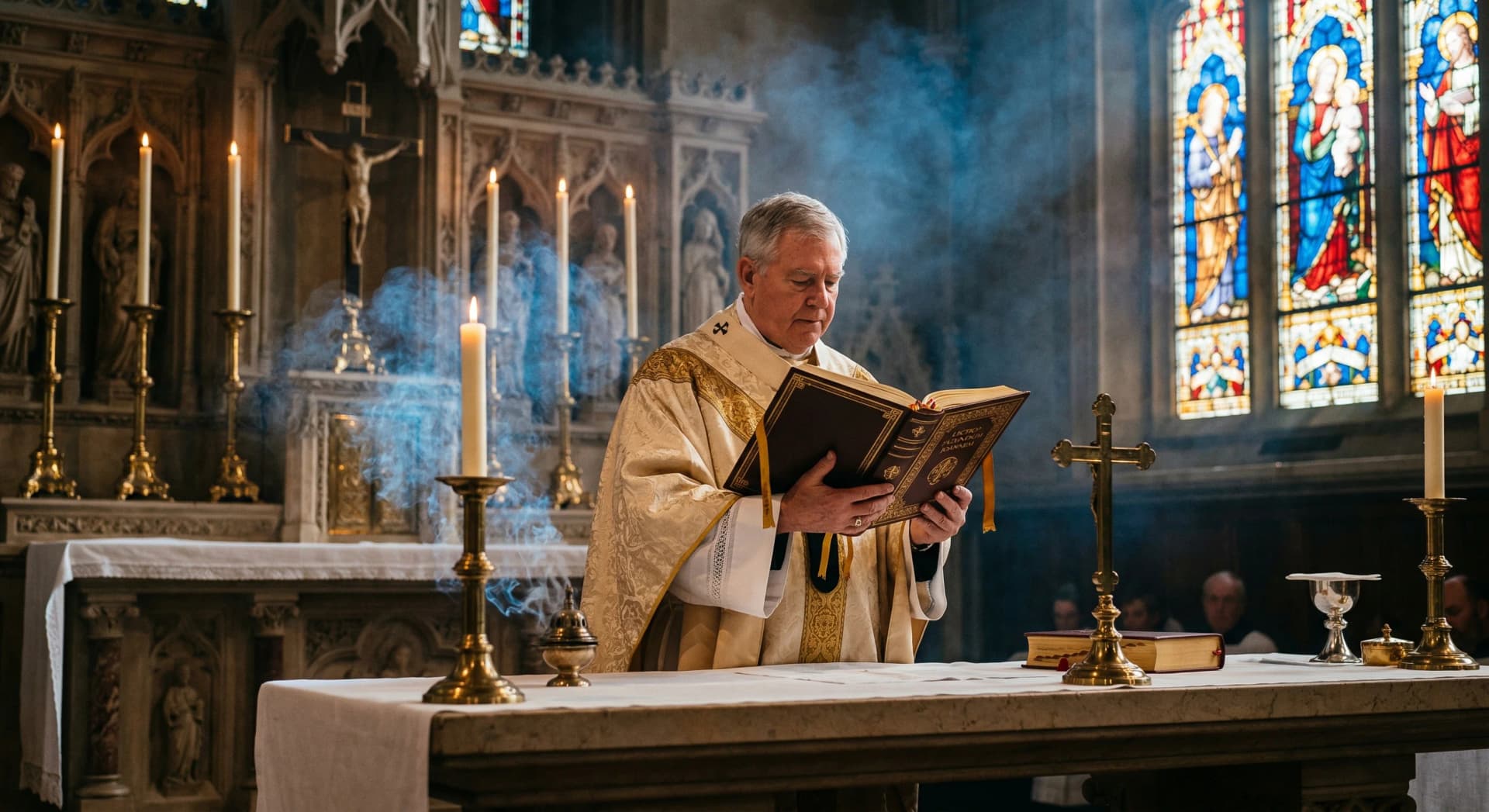
Catholic Mass Readings Today
Follow the Catholic liturgical calendar with today's mass readings, daily gospel, and lectionary. The Catholic lectionary follows a 3-year cycle (Year A, B, C) assigned by the United States Conference of Catholic Bishops (USCCB). Each day includes the First Reading, Responsorial Psalm, Second Reading, and Gospel—all organized according to the liturgical season and Sunday's theme.
The daily Catholic mass readings are the same worldwide. Whether you're preparing for Mass, following along at home, or doing personal prayer, these lectionary readings help you pray with the universal Church. Sunday readings follow the three-year cycle: Year A (Matthew), Year B (Mark), Year C (Luke), with John distributed throughout all years.
Current Liturgical Season
We are in Ordinary Time, Liturgical Year A (2025–2026). Year A centers on the Gospel of Matthew. Easter 2026 was April 5; Pentecost was May 24. The next major season is Advent, beginning November 29, 2026.
Lectionary
Catholic daily Mass readings for the liturgical year
16th Sunday of Ordinary Time
Old Testament
Wisdom 12:13, 16-19
Psalm
Psalm 86:5-6, 9-10, 15-16
Epistle
Romans 8:26-27
Gospel
Matthew 13:24-43
Go deeper with Gospel Daily
Unlock AI-powered reflection, original Hebrew & Greek word study, sermon builder, and 57+ study tools.
Try Free for 7 DaysAbout the Catholic Lectionary
The Catholic lectionary is a book of selected scripture passages arranged for proclamation at Mass. The current Roman Rite lectionary was revised after the Second Vatican Council and organizes readings across a three-year Sunday cycle and a two-year weekday cycle, ensuring Catholics hear a broad selection of the Bible over time.
Each Mass includes four scripture readings: the First Reading (usually from the Old Testament, chosen to connect thematically with the Gospel), the Responsorial Psalm (sung or recited in response to the First Reading), the Second Reading (from the New Testament epistles, read semi-continuously), and the Gospel (the climax of the Liturgy of the Word).
How to Use These Daily Mass Readings
You can use these daily readings for personal prayer (Lectio Divina), RCIA preparation, homily research, or simply to stay connected to the liturgical calendar when you can't attend Mass in person. The readings are organized by date and liturgical season so you can always find today's readings quickly.