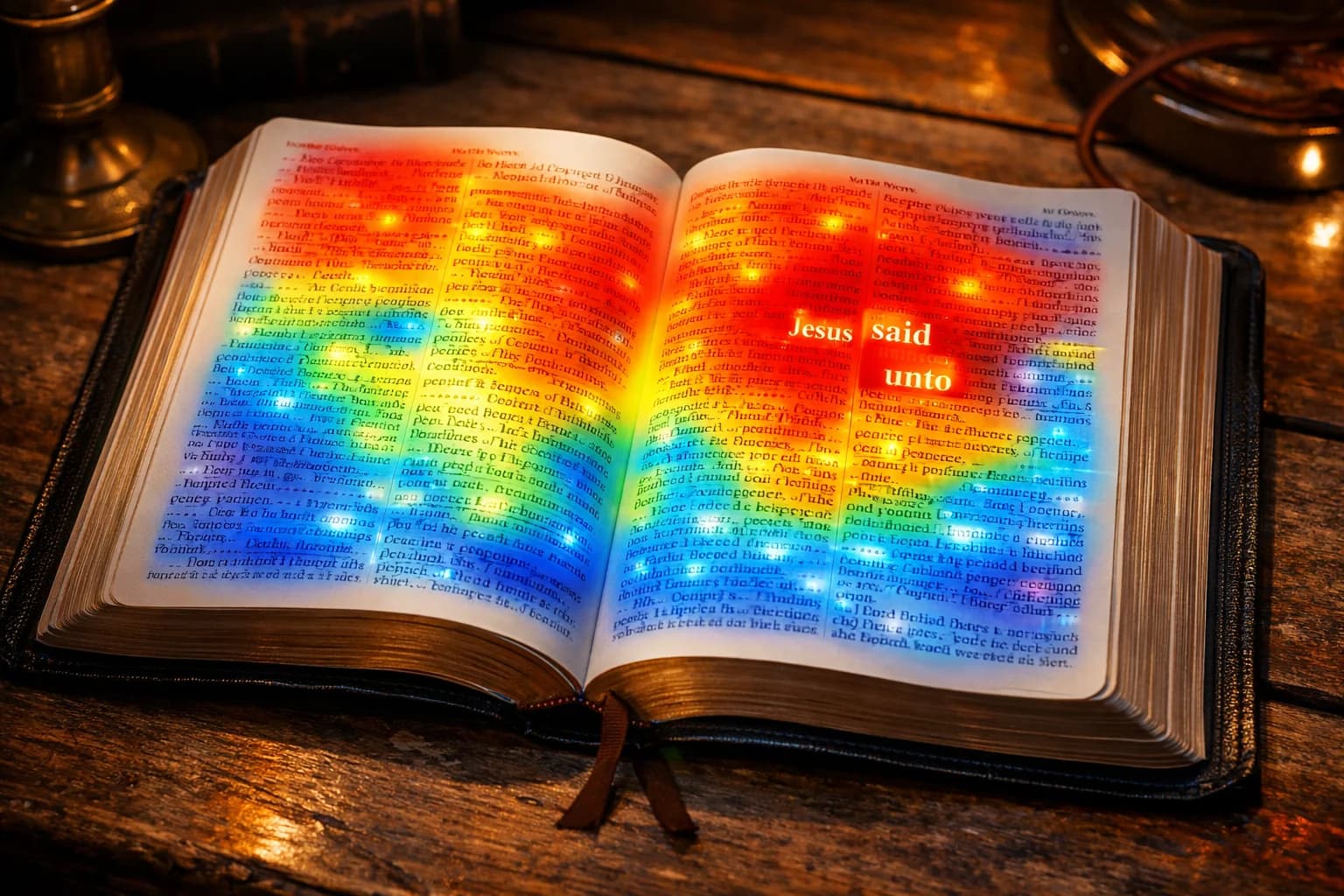
Scripture Heatmap and Word Frequency Visualization
See the scriptures like never before. An interactive, color-coded heatmap that reveals verse density, cross-reference concentration, and word frequency patterns across every chapter in the Bible.
What is a Scripture Heatmap?
A scripture heatmap is a visual representation of quantitative data about scripture, displayed as a color-coded grid where each cell represents a chapter. The color intensity indicates the value of whatever metric you are viewing -- verse count, cross-reference density, word frequency, or other measures. Darker or more intense colors indicate higher values, letting you instantly spot patterns and outliers across the entire canon.
This approach to scripture study borrows from data visualization techniques used in genomics, financial analysis, and software engineering. When applied to scripture, it reveals structural patterns that are impossible to see when reading linearly. For example, the heatmap immediately shows that certain chapters in Isaiah and the Psalms are among the most cross-referenced in all of scripture, while some shorter epistles contain almost no cross-references at all.
Verse density visualization reveals something about how scripture was structured. Chapters with very high verse counts (like Psalm 119 with 176 verses) stand out immediately. Word frequency heatmaps show where specific terms cluster -- you can trace the word 'covenant' across the entire Old Testament and see that it concentrates heavily in Deuteronomy and the prophetic books, with corresponding peaks in the New Testament's covenant-focused passages.
Gospel Daily's Scripture Heatmap covers the Bible in a single interactive grid. You can switch between metrics (verse count, cross-reference density, word frequency), zoom into specific books, and click any cell to jump directly to that chapter in the Scripture Reader. It turns the entire canon into a visual map where patterns, emphasis, and structure become immediately apparent.
How It Works
Choose a metric
Select what to visualize: verse density, cross-reference activity, word frequency for a specific term, or other quantitative measures.
Read the heatmap
Each chapter appears as a cell in the grid. Color intensity shows the metric value -- darker means higher. Spot patterns and outliers at a glance.
Dive into chapters
Click any cell to open that chapter in the Scripture Reader. Explore why certain chapters have high cross-reference density or unique word distributions.
Key Features
Full Canon Coverage
Every chapter across the Bible displayed in a single interactive grid for comprehensive visual analysis.
Multiple Metrics
Switch between verse density, cross-reference concentration, word frequency, and other quantitative measures with one click.
Word Frequency Search
Enter any word and see a heatmap showing where it appears most frequently across the entire scriptural canon.
Volume Comparison
Compare patterns across the Old and New Testaments, the Epistles, and the Old Testament side by side.
A sample of the verse density heatmap across selected chapters:
Old Testament: Psalms (Selected Chapters)
Psalm 23:1 (6 verses) | Psalm 46:10 (11 verses) | Psalm 119:105 (176 verses) | Psalm 139:14 (24 verses) Each cell darkens based on verse count—Psalm 119 stands out as one of the longest chapters in scripture.
New Testament: Matthew (Selected Chapters)
Matthew 5:16 (48 verses) | Matthew 6:33 (34 verses) | Matthew 22:37-39 (46 verses) | Matthew 28:19-20 (20 verses) The Sermon on the Mount (Matthew 5) reveals high verse density, making its teaching concentration visually apparent.
Cross-Testament Pattern
Old Testament chapters range from 6 to 176 verses, while New Testament chapters range from 10 to 80 verses. The heatmap reveals that longer, denser chapters tend to be highly cross-referenced and theologically significant.
Frequently Asked Questions
What is a scripture heatmap?
A scripture heatmap is a color-coded grid where each cell represents a scripture chapter. The color intensity corresponds to a quantitative measure such as verse count, cross-reference density, or word frequency. It lets you see patterns across the entire scriptural canon at a glance -- which chapters are longest, most cross-referenced, or contain specific vocabulary.
What can I learn from a scripture heatmap?
Heatmaps reveal structural patterns in scripture that are invisible during linear reading. You can see which chapters are most interconnected through cross-references, where specific words or themes cluster, how verse density varies across books, and how the Bible compare in structure and emphasis.
Can I search for a specific word?
Yes. Enter any word into the search field and the heatmap will display its frequency distribution across every chapter in the canon. This lets you visually trace where themes and vocabulary concentrate -- for example, seeing that 'faith' clusters heavily in Hebrews, Romans, and James.
Does this cover the entire Bible?
Yes. The heatmap covers the entire Bible, spanning both the Old and New Testaments. You can view the full canon in one grid or focus on a single testament for detailed analysis.
Start Using Scripture Heatmap
Full access to Scripture Heatmap and 57+ other study tools.
Starting at $7/mo or $59/yr
Already have an account? Sign in